

This week, Jack in the Box said that it would sell Del Taco. The primary reason is so Jack in the Box can focus on Jack in the Box. But the company also wants to improve its financial position, which means reducing some of those dastardly capital expenses. Yet there is also the fact that Del Taco is struggling. And then CEO Lance Tucker said this to analysts:
“I don’t know that the results over the next several years are going to meaningfully contribute to Jack’s bottom line,” he said.
Del Taco operates just under 600 locations, more than 100 of which are company-owned—though Jack in the Box has been selling those restaurants to franchisees in recent years. That is almost as many company-run stores as the 2,200-unit Jack in the Box has. Company locations theoretically generate more absolute profit than do franchise locations.
The idea that a chain with that many company-owned locations wouldn’t impact its parent company’s bottom line “over the next several years” suggests that Del Taco restaurants are struggling enough that it makes more financial sense to unload the brand, even at a steep loss from the $575 million paid to buy the concept just three years earlier, than it would be to keep it.
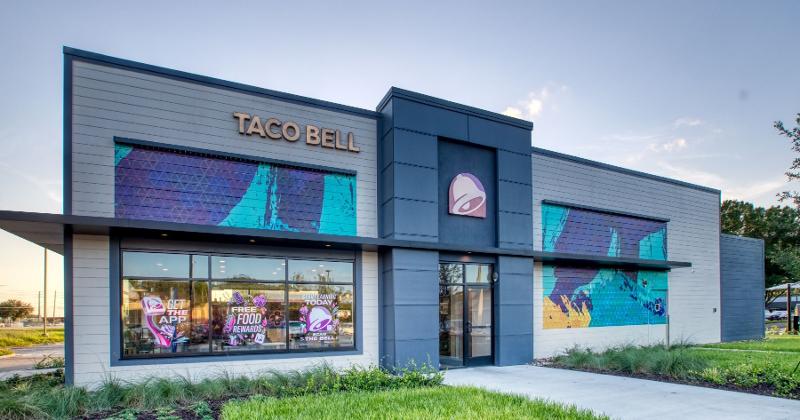
Del Taco’s struggles highlight one of the most lopsided competitive sets in the restaurant industry. In the fast-food Mexican business, there is Taco Bell, and there is everyone else.
It also highlights one of the main themes from 2024: Consumers are picking winners and losers more than they ever have, driven by a wide variety of reasons, be it marketing, budget, operations, speed or just whether they like a brand or not. As consumers have cut spending, they’re avoiding chains that don’t do what they want, and they’re flocking to those that do. The Mexican sector highlights this as well as anything else.
That Del Taco has struggled as much as it has—same-store sales have fallen for five straight quarters—makes no sense on the surface. Customers are spending a lot more of their money at such concepts. Limited-service Mexican chains on the Technomic Top 1,500 grew sales by 9% last year.
In fact, just look at overall performance and a company like Jack in the Box is getting rid of the wrong chain. Burger brands on the Top 1,500 grew just 1.4%.
But success is not created equal. On balance, fast-casual Mexican brands are doing well, particularly if they are of any size. Yet fast-food Mexican brands are not.
Taco Bell just skews those numbers.
The Irvine, California-based chain’s sales grew more than 8% last year thanks to healthy growth in average unit volumes and some unit growth. But most of its closest competitors are struggling.
Total sales among quick-service Mexican brands grew 7% last year. Remove Taco Bell and they declined 2%. Only one fast-food Mexican chain on the Technomic Top 500—No. 476 Taco Casa, at 4%—grew sales at all last year. Any other growth is among smaller chains that haven’t made the Top 500 yet.
Taco Bell is ridiculously dominant in its specific sector. It is 16 times as big as Del Taco, the second largest. It is 32 times as big as Taco John’s.
Almost no other chain enjoys that sort of dominance. McDonald’s, the largest restaurant chain on the planet, is less than five times as big as Wendy’s. Domino’s is not even twice as big as Pizza Hut. Chick-fil-A is four times as big as Popeyes. Starbucks is three times as big as Dunkin’.
The only other chain that has that is Panda Express. It is 10 times as big as the next largest “Asian/noodle” chain Noodles & Co. But in reality its closest competitor is Pei Wei, which is 4% the size of Panda, one of the industry’s most underappreciated success stories. Panda competes far more with local Asian concepts than it does any chain.
Yet among Mexican chains, the gap between Taco Bell and its competitors is widening.
You have to go all the way back to the first quarter of 2021 to find a period in which Del Taco’s same-store sales outperformed Taco Bell. You’ll also see a recent divergence in sales performance.
Chipotle is similarly dominant. It is 10 times as big as the next largest chain, Qdoba. But Qdoba is growing, unlike Del Taco—sales were up 10% last year. Sales by fast-casual Mexican chains that are not Chipotle grew 10%. (If we expand to include the largest 1,500 chains sales were up just 3% outside Chipotle, thanks to problems at some chains.)
A lot of fast-casual Mexican brands are doing really well, including Torchy’s Tacos (up 12%) and Velvet Taco (23%).
By the way, consumers are also not dining at full-service Mexican chains. Those concepts’ sales in the Top 1,500 grew just 2%. For every brand doing well, such as Bartaco (sales up 19%) or Condado Tacos (14%) there are chains not doing well, such as On the Border (down 23%) and Uncle Julio’s (down 5%).
So consumers are eating Mexican. They’re just going to certain chains. Those chains are probably fast-casual, a few casual dining. And Taco Bell.
